
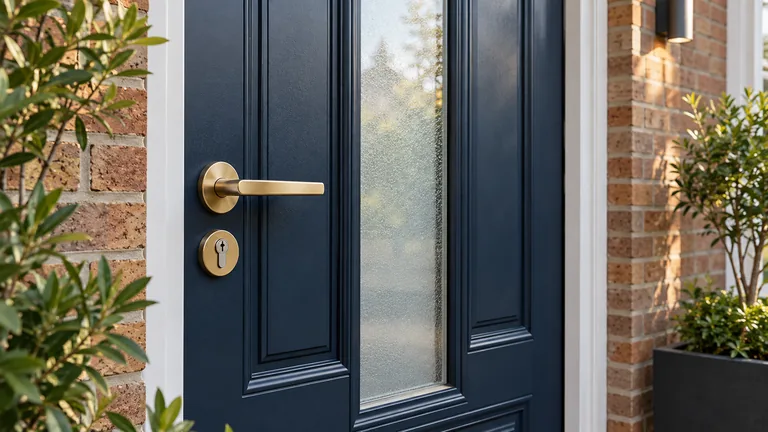
A door that will not lock is more than an inconvenience. It leaves your home or business insecure and can worsen if forced. The right response is to stop and assess, not to push harder.
Why a door stops locking
Several issues can prevent a door from locking properly. The most common include:
- Misalignment: The door has dropped or swollen, so the lock and strike plate no longer line up.
- Worn cylinder or mechanism: Internal parts have failed, so the key turns but the lock does not engage.
- Obstruction: Debris, a broken key fragment, or a foreign object is blocking the lock.
- Loose or damaged hardware: Handles, spindles, or multipoint gearboxes can wear out.
- Frame or hinge problems: A damaged frame or worn hinges can twist the door out of shape.
What you can check safely
Before calling a locksmith, you can make a few safe observations. Do not dismantle the lock or use force.
- Check for obvious obstructions: Look at the keyway and the strike plate for anything stuck. Do not insert tools or glue.
- Try the key gently: If it turns but nothing happens, the mechanism may be faulty. If it will not turn at all, the cylinder may be jammed.
- Open the door and try locking it: If it locks when open but not when closed, alignment is likely the issue. This is common with uPVC doors.
- Inspect the handle: A floppy handle or one that needs lifting hard can indicate a worn spindle or multipoint fault.
- Look at the door's position: Check for rubbing marks, gaps, or a door that catches on the frame.
If you notice any of these signs, avoid repeatedly forcing the key or handle. That can turn a simple repair into a replacement.
When to call a locksmith
If the door will not secure, you need professional help. A locksmith can diagnose the cause and recommend the right fix. Common solutions include:
- Adjustment: Hinges or keeps may be adjusted to realign the door.
- Repair: A worn cylinder, gearbox, or handle may be repaired or replaced.
- Replacement: If parts are beyond repair, a compatible replacement can be fitted.
For uPVC and multipoint doors, the mechanism is complex. Our multipoint lock repairs & replacements service covers diagnosis and repair. If the door has dropped, door alignment & adjustment can restore smooth operation. For faulty cylinders or handles, see faulty lock repairs.
What to tell your locksmith
When you call, have the following details ready:
- Your full postcode.
- The door type (uPVC, timber, aluminium, composite).
- Whether the door is open or closed, and if it is secure.
- What happens when you try to lock it (key turns, handle moves, etc.).
- Any recent changes, such as building work or extreme weather.
This helps the locksmith confirm availability and prepare for the visit. For more guidance, see our answers on what to tell a locksmith and what to prepare.
Preventing future problems
Regular maintenance can keep locks working. Lubricate cylinders with a suitable product, check handles and hinges for looseness, and address minor alignment issues early. If you have a uPVC door, our guide on why your uPVC door won't lock when closed explains more.
If your door will not lock, do not delay. A secure door is essential. Call a locksmith who can assess the problem and restore your security.