
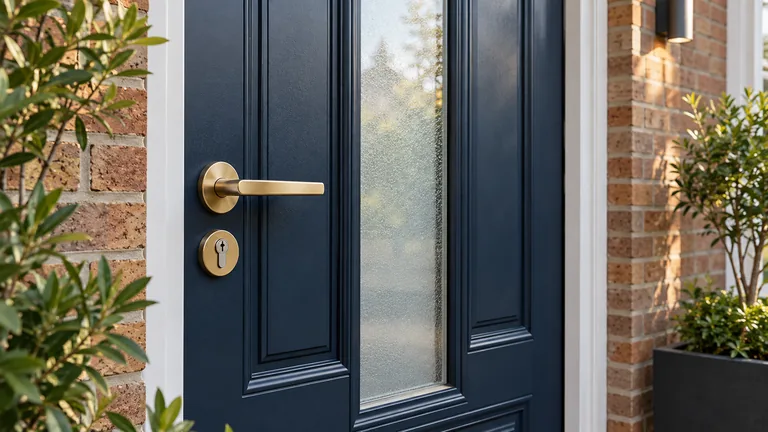
A new handle or hinge can restore smooth operation, but only when it suits the door. Birmingham homes and businesses have a mix of uPVC, timber, aluminium and composite doors, and each type has its own hardware requirements. Choosing by appearance alone often leads to premature wear or a door that no longer locks cleanly.
Start with the door, not the finish
Before comparing styles, establish what the door actually needs. A handle that matches the colour but has the wrong fixing centres will not fit without new holes, which can weaken the door. Similarly, a hinge rated for a light internal door may fail quickly on a heavy external entrance.
- Door material: uPVC, timber, aluminium, composite or steel
- Door weight and usage: light internal, heavy external or high-traffic commercial
- Existing preparation: screw positions, spindle size and handle backplate dimensions
- Handing: left or right, and whether the door opens inwards or outwards
If you are unsure, photographs of the existing hardware and the door edge can help a locksmith identify compatible options. Our guide on sending door and lock photographs on WhatsApp explains what to include.
Handles: more than a turning point
A handle transfers force to the lock mechanism. If it is loose, stiff or the spring has failed, the lock may not engage fully. This is common on uPVC doors, where a floppy handle can signal a worn spindle or a failing multipoint gearbox. Our answer on why a uPVC door handle goes floppy covers the likely causes.
When replacing a handle, check the spindle length and the distance between fixing screws. A handle that is too short may not reach the lock, while one that is too long can bind. For doors with a euro cylinder, the handle may also need to be compatible with the cylinder's escutcheon or protective furniture.
Hinges and alignment
Hinges carry the door's weight and control how it sits in the frame. Worn hinges can cause the door to drop, rub or fail to latch. Adjusting hinges or keeps may help, but if the hinge itself is damaged or the frame has moved, replacement or repair is needed. Our door alignment and adjustment service assesses hinges, clearances and keeps before work starts.
On uPVC doors, hinge adjustment is often possible, but the hinge type must match the door system. For timber doors, butt hinges are common, while aluminium entrances may use pivots or floor springs. A locksmith can confirm what is suitable for your door.
When to replace rather than repair
Hardware that is loose, corroded or cracked should be replaced. A sticking key or a handle that needs lifting hard may indicate a deeper issue with the lock or multipoint mechanism. Our guide on what to do if your door won't lock explains why forcing it can cause more damage.
If the lock itself is worn, a replacement cylinder or lock case may be needed. Our lock replacement or installation service covers compatible hardware for homes, rentals and businesses.
What to prepare before you call
- Photographs of the handle, hinge and door edge
- The door material and approximate weight
- Whether the door is a fire door or has any access-control requirements
- The number of doors affected and whether you need matching finishes
For a planned upgrade, mention any insurance specification or lease restrictions. Our lock changing and upgrading service can discuss options that suit your door and security needs.
A note on fire doors
Fire doors have specific hardware requirements. Handles, hinges and closers must be suitable for the door assembly and its intended performance. Do not substitute decorative hardware on a fire door without checking suitability. Our panic hardware and fire exit doors service covers assessment and maintenance for escape routes.
Getting the right fit
Hardware choice affects how long a lock lasts and how easily a door operates. If you are unsure about compatibility, ask a locksmith to assess the door before ordering. This avoids wasted purchases and repeated callouts. For urgent problems, our emergency door opening service can help when a door will not open or secure.